


WIldlife-watching papua
Once a land of myth & rumour, Papua is now becoming more accessible than ever. Birder’s will already be well versed on the island's myriad Birds-of-Paradise, Kingfishers, Pigeons & unique species however other creatures are starting to reveal themselves, especially in remote areas. Once mythical endemics are now showing with some regularity & new species of even higher taxa such as mammals & birds are being described. Western Long-beaked Echidnas, Tree Kangaroos & barely known types of Marsupial beckon in this land of the unknown along with many reptiles, amphibians & gigantic butterflies, this is the frontier of Indonesian wildlife-watching.
Where We Visit
Raja ampat
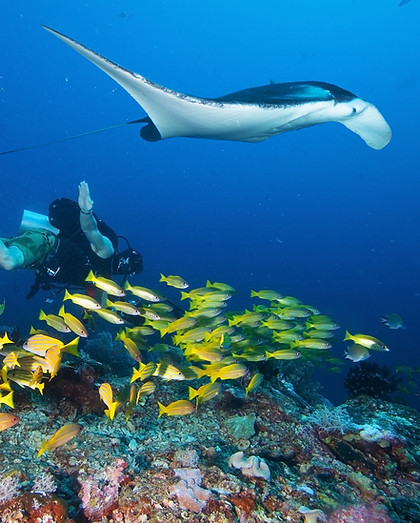
The most famous destination in Papua is also excellent for wildlife-watching, whilst mainly known for hosting some of the world's most biodiverse & spectacular reefs, above water the stunning diversity continues. We focus on two of the larger islands below that have been isolated from the mainland but any sizeable island in Raja Ampat has much to offer on land as well as under the waves.
Sites:
Waigeo- The largest island & where the main town of Waisai is located is also one of the most spectacular for wildlife-watching. Known for two extraordinary Birds-of-Paradise, the Red & Wilson's. The islands have much more to offer, bird-wise, Parrots, Crowned Pigeons, Paradise Kingfishers & many night birds are found, for mammals the beautiful Waigeo Spotted Cuscus is a great endemic find, Striped Possum, sugar gliders, Northern Common Cuscus & bandicoots can also be seen not far from the accommodation. Reptiles are abundant with Blue-tailed & Golden speckled Monitor Lizards, Green Tree Pythons & rare geckos. All of this can be seen whilst staying on white sand beaches framing some of the world's best reefs & island scenery.
Batanta- Batanta's diversity is very similar to Waigeo but it also has it's own monitor lizard, the Blue-spotted Monitor, & is a better place to see Northern Cassowaries. The island also hold's a good population of Dugongs which can be searched for from it's homestays.
These islands are two of the "four kings" which is what Raja Ampat translates too, the other two, Salawati & Misool are also diverse but hold species more associated with the mainland and are more difficult to visit, they are however great for reptiles. The far flung islands of Kofiau & Gebe also have endemics but are expensive to visit & remain very little visited.


Birds head
One of New Guinea's major centres for endemism & biodiversity, the birds head's lowland's sprawl into the foothills of the Tambrauws & into the peaks of the infamous Arfak Mountains. Much of this area has only just begun to be explored by naturalists & the findings have been outstanding, resulting in sightings of creatures that were once mythical or indeed thought to be extinct. Staying in small villages surrounded by forest is a quintessential part of the experience
Sites:
Around Sorong- Many of the villages along the remote roads out of the city of Sorong have now turned to eco-tourism as a means of extra income & wildlife is truly abundant, Each areas has it's specialties & some of those are very special indeed. Western Long-beaked Echidnas are now seen with some regularity, rare forest marsupials in the form of wallabies, possums, cuscus, bandicoots & dasyures make for incredible spotlighting. Some incredible birds in the form of Greater Melampitta, Northern Cassowary, Thick-billed Ground Pigeon, Red-billed Brushturkey, Red-breasted Paradise Kingfisher & Black Lory are best seen at these sites with an incredible supporting cast including hides for 5 birds of paradise. Reptiles are also well represented with highlights including Crocodile Monitors & Papua Forest Dragon. Welcoming villages with often decent accommodation for these remote areas make this either a great addition to a trip to the Raja Ampat islands to a full scale expedition heading right to the foot of the Tambrauw Mountains.
Arfaks-Syoubri- One of Papua's most isolated mountain ranges, the high Arfaks not only contain much of the island's incredible biiodiversity but also a staggering number of endemics, some of which are truly spectacular. Some of these are indeed found in the neighbouring Tambrauws and on the Bird's Neck but this is easily the most accessible place to search for them. This includes 4 Birds-of-Paradise, many elusive marsupials & some of the world's most spectacular butterflies. The area is well noted for its birdlife which includes a further 6 Birds-of-Paradise, many parrots & many montane endemics & specialties including Masked Bowerbird & the Vogelkop Bowerbird with it's astonishing bowers. Mammal-wise the area has just started to reveal it's secrets with many restricted range species being found at night including Reclusive Ringtail, Stein's Cuscus, Arfak Ringtail & other possum species. Bats & rodents, many only found here or in New Guinea can be quite abundant. For Butterfly lovers, the Arfaks are essential with many endemics including Rothschild's Birdwing, Goliath Birdwing & Paradise Birdwing. The mossy forest's here are stunning & this region should be visited by any serious naturalist.
Arfaks-Gunung Mupi- This area is far more remote than more traditional sites in the Arfaks & it is this remoteness that has kept the unique forest biodiversity here largely intact & pristine. Whilst the assemblage of species is very similar to elsewhere in the Arfaks, it has a distinctive blend of highland & lowland species meaning some species are more easily seen here. It is the lack of hunting here which produces the most astonishing sightings here with good populations of mythical species that seem unperturbed by human presence, this includes two species of tree kangaroo, the Grizzled & the Vogelkop. This is the easiest place in New Guinea to connect with these creatures. Otherwise mammalian diversity is high with D'Albertis Ringtail, Reclusive Ringtail, Arfak Ringtail, Feathertail Glider, Raffray's Banidcoot, Ground Cuscus & much more. More information on birds can be found on our birding page but expect many highly sort after species, some of which are rarely seen elsewhere. This may well be an excellent place to search for the enigmatic Dwarf Cassowary.
This is one of Indonesia's most exciting wildlife-watching regions where local enrichment & conservation go hand in hand to help protect some of the countries most pristine forests, whatever you are searching for you will most likely find it here!
birds neck
Largely remote & under-explored this is one of New Guinea's most little visited regions yet hosts two incredible sites for wildlife watching. These areas likely still hold a few surprises & quite possibly undescribed species. Our guides here are incredibly hospitable & knowledgeable about their forests enriching your visit here into the unknown.
Sites:
Wondiwoi- The remote Wondiwoi peninsula has yet to give up all it's secrets, arriving by boat into the port town of Wasior, the mountains loom close to the shore and it is in these mountains that an incredible diversity is being uncovered. Camping at different elevations there is much to see, the largest prize of which would be to site the incredibly rare & only recently discovered after 100 years, the Wondiwoi Tree Kangaroo, this has to be one of the planet's rarest creatures and has been sighted in this area of the mountain. The beautiful Black-spotted Cuscus, Vogelkop Tree Kangaroo, Grizzled Kangaroo also occurs as do many other many other marsupials including the puzzling occurrence of a possible Dorcopsulus Wallaby, possibly a brand new species. Birds are well represented with rarely seen species such as Torrentlark, Presquet's Parrot, Papuan Harpy Eagle, Chestnut-backed Jewel Babbler, Bronze Ground Dove & many Birds-of-Paradise with Western Parotia, Vogelkop Lophorina & the rarely seen atratus subspecies of Black Sicklebill being common. This is a truly extraordinary adventure where few have trodden before, every day & night has the possibility of uncovering something amazing.
Fakfak- Accessible but rarely visited, the limestone hill forest of Fakfak is just a 20 minute drive from the colourful harbour city. Within its expanse are many rare species. Specialties include Yellow-banded Robin, Pheasant Pigeon, confiding Southern Cassowary & hides for Pittas & Birds-of-Paradise. Grizzled Tree Kangaroo, Black-spotted Cuscus & many other marsupials are found here and the herping is some of the best in Indonesia with the fascinating Pinocchio Frog, Muller's Skink, White-eyed Crocodile Skink, rare Cyrtodactylus Geckos & an incredible diversity of snakes. This is an excellent opportunity to explore an under-explored region of New Guinea whilst staying in good accommodation & having lunch in restaurants. A rarity indeed.
This region excels on it's own or as an addition to a Papua trip where the possibility of seeing some very rarely seen species only enhances the excitement of treading where few have before.


north papua
The vast northern expanse of New Guinea is largely inaccessible, indeed some of the remotest back country on earth. However around the regional capital of Jayapura lies accessible forests & offshore island offering their own unique biodiversity, these area's are an essential piece of New Guinea's diversity puzzle.
Sites:
Nimbokrang- the swampy lowlands surrounding the settlement of Nimbokrang are the most accessible in the northern lowlands, Mainly known for their birds including many Birds-of-Paradise, including 2 only found here & a huge number of lowland denizens including a few more north endemics & rare species such as Victoria's Crowned Pigeon, Northern Cassowary, Shovel-billed Kingfisher & Salvadori's Fig Parrot. Mammal wise in the more remoter reaches live Black-spotted Cuscus, Common Spotted Cuscus, Grey Forest Wallabies & many smaller species. Reptile diversity within this swampy forest is extremely high. For an accessible New Guinea rainforest adventure with good accommodation this is an excellent choice.
Biak/Numfor- The islands of Biak & Numfor have a diversity all their own with an incredible 23 endemic birds including the alluring Biak Paradise Kingfisher, Numfor Paradise Kingfisher, Geelvink Fruit Dove, Biak Monarch & Geelvink Pygmy Parrot. Biak Glider & Blue-eyed Cuscus are attractive endemic mammals & reptiles are worth searching for. Biak is far larger & more populated but has a well known forest area with good guides, Numfor is far smaller & untouched with great forest speckled with clear springs & stunning beaches. These islands hold more endemics per area than any other island in New Guinea & perhaps the whole of Indonesia & their inclusion in a Papua trip should be seriously considered.
This area could be visited without ever having to leave a good hotel which is a rarity in Papua, but adventure also beckons, making this region as diverse in how you choose to access it as it is in the species that live here.
south papua
The Trans-fly region of New Guinea is a world of it's own, more reminiscent of Northern Autralia, featuring many of the same species, it also has a decidely New Guinea element, the melding of the two has created a unique world of swamps, savannahs, paperbark & open lowland forests where viewing wildlife might be at it's easiest in New Guinea.
Sites:
Wasur National Park- One of Indonesia's most unique national parks, this area has many faces. Waterbirds flying in mass over swamps, Wallabies bounding over savannahs & rare birds, reptiles & mammals inhabiting the fringing forests, Wasur is incredibly biodiverse. Little visited & offering a wealth of opportunity, you could see over 100 species of bird here in a few days including rare species such as the mighty Papuan Harpy Eagle, Painted Quail-thrush, Little Paradise Kingfisher & Spangled Kookaburra. Apart from two wallaby species, the area also contains Feathertail Gliders & many little seen marsupials with possibly the southern endemic Bronze Quoll, New Guinea's largest carnivore. As with the Australian-esque surrounds suggest reptiles abound with the area full of snakes-including Taipans!-& rare skinks. Even rare river turtles have been recorded here. This is a wonderfully singular Papuan destination that would add many creatures to anyone's list & is highly recommended.
Easily accessed from Meruake, Wasur adds a distinctive flavour to a trip to Papua with a unique diversity to back it up, there are doubtless unrecorded species here in it's wild expanses.
Suggested itineraries

Classic Sumatra Wildlife
Tiger Tracking

Islands & Mountains

Sumatra Primates

Papua Rare Mammals
Request an Adventure
Let us know where you would like to go or what you would like to see and we'll do the rest!