


WIldlife-watching sumatra
Whilst often in the headlines for rampant deforestation & palm oil plantations, the remaining forests on Sumatra hold a spectacular biodiversity including some of South-east Asia’s most important reserves. It’s lowlands are packed with Sundaic specialties including Elephants, Sun Bears, Tapirs & many cat species, however much of Sumatra’s diversity is it’s own, especially within the primate family with two unique Orangutans & many beautiful langurs. The island’s dramatic mountains also hold species that are unique to Sumatra, some of which are barely known. The islands off its west coast also hold incredible endemism with some very special primate species in their remote forests. We visit the entire island & many of its forest reserves, whether on a general wildlife-watching trip or a targeted quest for some of Sumatra’s rarest species.
Where We Visit
northern sumatra
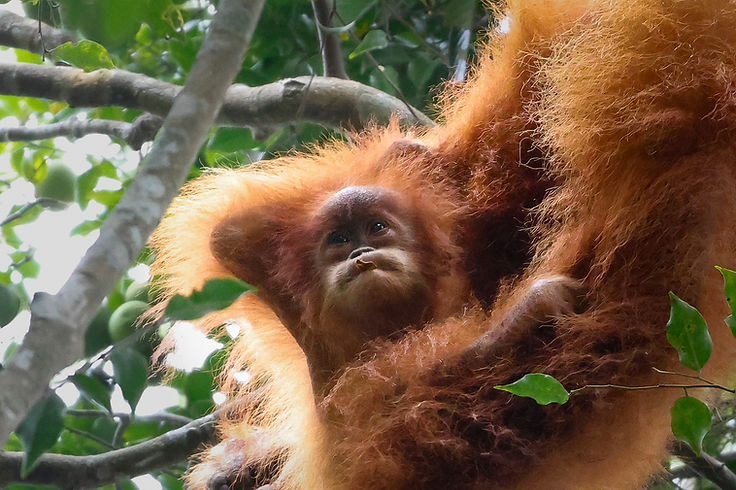
The provinces of Aceh & North Sumatra hold perhaps Sumatra's best known wildlife destinations with the Sumatran Orangutan being the main attraction, however there is much more to see here with many other wonderful primate species, Elephants & a vast array of other possibilities. In the more remote reaches lie far lesser-known destinations that offer their own attractions such as spots for the recently described & highly endangered Tapanuli Orangutan & other endemic primates & remote mountainous areas where rare species may show themselves. Below is a selection of sites we visit, we have other sites for more target specific trips.
Sites:
Gunung Leuser National Park- accessed from either province, we visit many areas of this grand forest reserve, one of the most important in Asia. This includes area's little visited by other tourists for great looks at truly wild Orangutans, Gibbons, Slow Loris & many other primates. We also have a spot for Sumatran Elephant & on our specialist tours who knows what else might turn up.
Batang Toru- famous for its Tapanuli Orangutan population, the remaining forest's in this region are still rich in wildlife including the endemic Black Sumatran Langur, Siamang, Agile Gibbon, Slow Loris, many civet species & even tiger still prowl these hills.
Batang Gadis National Park- This remote mountainous national park has barely been visited by outsiders yet holds excellent forest and a low human density, its wide roads are excellent for spotlighting and new discoveries are still to be made, Tapir is possible here as well as rare species such as Pen-tailed Tree Shrew which we found here for the first time in 2024. Expect rare birds & denizens of Sumatra's mountain forests such as civets. Tiger are also present.
Hadabuan Hills- This is a special destination that we offer for the first time. This destination offers one of the best chances to track wild Sumatran Tiger & is a spectacular swathe of hill forest with a mouth-watering list of species showing decent population density including Tapir, Sun Bear, Clouded Leopard, Golden Cat, Marbled Cat & Serow. It is also still home to many hornbills including the extremely rare & magnificent Helmeted Hornbill.
Whether on a short quest to discover wild orangutans & experience Sumatra's nature or on a dedicated wildlife expedition, Northern Sumatra has more than it's share of attractions & shares the bonus of being easy to access from many starting points, including Malaysia & Singapore.

Central sumatra
The central portion of this great island starts high in the western mountains of the Barisan range which forms the spine of Sumatra, it's highest peaks are here and form extensive montane habitats until they peter out into the lowlands until finally reaching the remote swamps & deltas of the east coast. This vast range of habitats contains the majority of Sumatra's incredible biodiversity. The area encompasses, perhaps, the most accessible & exciting montane regions of the island and also some of the islands best remaining large mammal populations, while still highly imperiled, its lowland and swamp portions are quite accessible and provide a rare chance to see true lowland jungle & it's associated fauna on the island.
Sites:
Kerinci Seblat National Park- The largest protected area on Sumatra & a UNESCO heritage site, this National Park spans a huge swathe of the central Barisan range all the way down to the lowlands of the west coast, its enormity means there are many sites to be visited at different elevations. this includes around the peak of Kerinci itself, Sumatra's highest, Along the Tapan road with its differing altitudes and sets of species & also further south in its mid-elevations where deep forest can be accessed, in terms of wildlife, this is one of Sumatra's best birding locations, one of South-east Asia's most important tiger habitats and also full of other critters including Siamang, Black-crested Langur, Slow Loris, many squirrels, Bintourong & other civets commonly seen. We also offer trips to find Sumatran Rabbit, one of the least known of the islands inhabitants, which we were successful in locating in 2024, and also deep treks into areas known for genuine sightings of Tiger, Sun Bear, Tapir & other larger animals. This is an unmissable site for a true wildlife safari in Sumatra.
Bukit Tiga Puluh National Park- Some of the last remaining lowland jungle on Sumatra, Bukit Tiga Puluh might be imperiled but still holds most of the islands lowland fauna, including Elephants, Tigers, Sun Bear, Tapir and many cat & civet species. It is the best place to see the endemic Black-and-White Langur & is good for Agile Gibbons. It is also an excellent place to see hornbills. Little visited, with local guides & rangers there are great chances for wildlife encounters here.
Kampar Peninsula- Much of Sumatra's vast eastern wetlands have disappeared due to coastal development & agriculture, in Riau province, the Kampar peninsula holds some of the last pristine swamp forests in the region, and these hold a great amount of little seen species such as the highly endangered & range restricted East Sumatran Banded Langur, common in the reserve and wetland specialists like Flat-headed Cat & Otter Civet as well as Sun Bear, Clouded Leopard, Marbled Cat. Shrew-faced Squirrel, Agile Gibbon & many rare sundaic wetland bird species. With good accommodation and boardwalks & boat trips it is a emerging destination to get a glimpse of the often elusive wildlife of the Sunda wetlands.
We also offer dedicated primate trips to this region covering all the Sumatran endemics found here, as well as the rest of the island, more information on this and trying to find some of Sumatra's rarest wildlife can be found near the bottom of this page. Travelling thorugh this portion of the island with it's breathtaking mountain lakes, villages and old grand lowland jungles is an adventure in itself and is far less visited than the major sites of the north.
Southern sumatra
As the Barisan mountain range comes to its conclusion in the south, it still surrounds itself in dense forest hosting some very special flora & fauna, some of Sumatra's rarest creatures are best searched for here, whilst Way Kambas is a well-known location amongst wildlife aficionados, Bukit Barisan is an emerging destination yet it is however showing a lot of promise.
Sites:
Way Kambas National Park- One of Indonesia's oldest national parks actually protects mostly secondary forest but this doesnt seem to bother the wildlife and my what a list of wildlife the park contains, within its forests and swamps roam Tigers, Elephants and is now confirmed to still contain a few of the last Sumatran Rhinoceros, although Elephants are the only species ever seen by visitors. The roads passing through the forest provide a rare insight into Sumatra's forests and provide a way to view often elusive wildlife with species such as Sun Bear, Otter Civet, Banded Civet, Malayan Tapir & Clouded Leopard all being seen before by casual tourists, don't expect to see these species but hope for an encounter. Other species such as Siamang, Slow Loris & a variety of stunning sundaic birds such as Crested Fireback Pheasants, Great Argus, Trogons & Broadbills are regularly encountered however. Excellent accommodation, easy access & brilliant guides also feature.
Bukit Barisan Selatan National Park- This large national park is the remaining piece of the UNESCO world heritage tropical forests of Sumatra, it is rarely visited yet is full of wildlife, some of it surprisingly accessible. We visit 3 main areas, the first is the lowland section, rarely visited but full of wildlife. Primates feature strongly with Agile Gibbons, Siamang, the endemic Mitred Langur & elusive Horsefield's Tarsier are quite easy to find. Larger mammals such as Sun Bear, Tapir & Elephant are indeed possible & smaller creatures such as mousedeer, civets, Colugo are common. Birds difficult to see in Sumatra such as White-crowned Hornbill & Rail-babbler are also seen here. Tiger sign is also commonly found yet seeing them is another matter. The other 2 sites are in the hills and the highlands, remote and full of wildlife these areas can be good for rare reptiles, flying squirrels & Sumatran Striped Rabbit.
Easily accessed from Jakarta, this region can uncover a bounty of wildlife, even a short trip could unveil a wonderful portion of Sumatra's diversity. We are also in talks with another area in this region that looks very promising, even for Tiger, we will update when this is available.


Sumatran islands
Off of Sumatra's west coast lie a chain of deeply isolated island groups, whilst all of these have their own set of endemic species it is the Mentawai group that holds the most interest to wildlife-watchers, they hold an incredibly unique set of primates, squirrels & rodents, more than any other island of their size in the world. Their unique biodiversity is only recently coming to light with many birds, reptiles & other groups being rather different to their mainland relatives.
Sites:
Siberut- the largest island in the group, the location we visit in its remote south is the best place to try and see the incredible, elusive & shy primate species of the island, the Pig-tailed Langur Simakobou, Kloss's Gibbon Bilou, Siberut Langur Joja & Siberut Macaque Bokoi, apart from some of the world's most exciting & adventurous primate-watching, the area also holds 4 endemic squirrels, 2 endemic rates, the golden-bellied treeshrew & the fabulous Mentawai Palm Civet. Birding & herping are also excellent with many endemic or rarely seen species. Travelling through the mangroves into the open see to reach this location is a magical journey in itself.
Sipora- For truly serious primate watchers who also want to see the endemic Mentawai Langur Joja pagai & Mentawai Macaque Bokkoi, the islands are also home to Kloss's Gibbon Bilou & Pig-tailed Langur Simakobou and many birds including rare species such as Storm's Stork, Black-and-white Bulbul & the critically endangered Silvery Pigeon.
A voyage into the remote Indian ocean, these deep dark islands with their fabulous diversity & amazing local culture are an adventure of a lifetime.
Suggested itineraries

Classic Sumatra Wildlife

Tiger Tracking

Islands & Mountains

Sumatra Primates

Sumatra Rare Mammals

Request an Adventure
Let us know where you would like to go or what you would like to see and we'll do the rest!